Straight, Incorporated
Date: 2001-12-14
From: Cannabis Culture
Url: http://www.cannabisculture.com/
Straight, Incorporated
by Pete Brady, story and photos (12 Nov, 2001)
 In 1982, Leigh Ann Bright was a rebellious teenager who used marijuana and
alcohol. Her mom told her she had to talk to counselors at a St Petersburg,
Florida drug rehab institution called Straight, Incorporated.
In 1982, Leigh Ann Bright was a rebellious teenager who used marijuana and
alcohol. Her mom told her she had to talk to counselors at a St Petersburg,
Florida drug rehab institution called Straight, Incorporated.
A week
before her 15th birthday, Bright went to Straight's building, a converted
warehouse. She began chatting with two other teenaged girls, who suddenly
announced that they were "peer counselors" who believed Bright had a
"serious drug problem" requiring long-term treatment. They told Bright to
sign a form agreeing to participate in Straight's residential rehab
program. She tried to get out of the room and asked to speak to her
parents. She was prevented from exiting. Other Straights joined in, telling
Bright she would be "court ordered into the program" unless she signed the
consent form.
"They said I could leave after 14 days," Bright
recalled recently.
Now a 33-year-old accountant who worked full time
while earning two bachelor's degrees, Bright says she is "haunted" by what
happened to her in Straight's warehouse nearly 20 years ago.
For six
months, not 14 days, Bright was sequestered in the Straight program against
her will, without a shred of peace or privacy, without permission to
communicate freely with the outside world.
"I was crying and
desperate. I was a prisoner," she says.
Going to the bathroom,
showering, getting dressed, sleeping, eating - the youngster's most
intimate acts were monitored by Straight staffers, most of whom were
troubled teens who had been in the program longer than her.
During
the day, Bright and hundreds of other youngsters were forced to participate
in bizarre rituals. They were required to write "moral inventories,"
detailing how drugs and sex "ruined" their lives. They sat through hours of
lurid encounter group sessions in hot, unventilated rooms, listening to
emotional discussions and Straight's Orwellian philosophy.
Bright
felt she had been kidnapped by a cult-like organization.
"Straight
had its own really weird lingo and some group customs," Bright recalls,
describing fellow inmates who jumped around, frothed at the mouth, and
waved their arms in reckless abandon during surreal
"motivational-confessional" sessions in which they were compelled to
publicly disclose their deepest, darkest secrets.
Girls and boys
were in separate areas of a large room during these sessions.
"You
could hear the boys complaining about being sexually abused," Bright said.
"It was like any prison - if somebody wants you and can overpower you,
you're fair game. Their stories were horrible."
Every evening,
Bright was taken under watch to "foster homes" run by families that had
daughters in Straight. Parents of "Straightlings," as Bright now calls
them, were required by Straight to be wardens of "newcomers" like Bright.
Suburban homes were used as de facto prisons where Bright was watched
closely by a veteran Straightling, called an "oldcomer," and her parents,
until the sun came up and she was transported back to the
warehouse.
The young girl's life became a blur of torment and
depression. She begged her captors to allow her to leave. "You're not going
anywhere until you are cured," they told her. "We can do whatever we want
to."
"They wanted us to do hours of military-style exercises,"
Bright recalls. "I'd get exhausted. The oldcomers vilified me. They'd
circle around and begin hitting me. They knocked me around like a
beachball. They threw me on the ground. They sat on me. They bruised me. I
have a permanent injury from what they did, but they did a lot worse to
other kids. They broke kids' bones and bloodied them up. They drove kids to
attempt suicide. Brutality was part of their program. They called it 'tough
love.'"
Once, when Bright got angry and refused to cooperate with
her torturers, she was made to stand in front of a group of snarling
oldcomers hurling verbal abuse at her. She fought back, and was thrown to
the ground by Dr Miller Newton, Straight's director.
"Miller Newton
terrified me," Bright explained. "He was tall and had a lot of weight on
him. When he got angry, his face would get red underneath his beard. He was
physically abusive to a lot of kids, the most frightening man I've ever
known. He grabbed me by the hair and threw me. Then he gave the order to
'marathon' me, which was what they did if they really wanted to mess you
up. For three days and nights, they refused to give me food or let me
sleep. When I went to the foster home, the girl told her mother, 'She's
being marathoned, we have to keep her awake.' I hoped her mother would have
some compassion, but she just went along with it. They stayed up all night
in shifts preventing me from sleeping."
Bright constantly thought of
escape. Other Straight victims won freedom by crashing through a window or
leaping out of a moving car, but Bright didn't want to injure herself, she
just wanted to tell her parents how desperate she had become, and that
Straight was not providing any of the professional counseling or medical
services that her parents were paying for.
"Straight told parents
that if your kids tell you they are being assaulted, it's a lie, all
druggies are liars," Bright says. "I begged my mother to put me in juvenile
detention or some hospital, anywhere but back in Straight. They required my
parents to be involved in Straight parent sessions. They took a ton of
money from my family. Straight was all about money. They kept you until the
money ran out. Straight was a for-profit prison, but it was also a twisted,
abusive family."
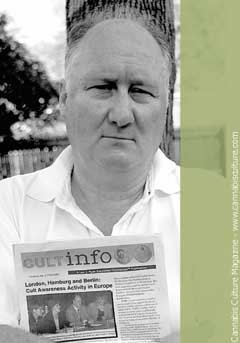 |
| Wes Fager: `I`ve spent
the last six years of my life gathering data on
Straight.` |
Bent Straight
Even if
Leigh Ann Bright's story was an isolated anecdote, it would still be deeply
troubling. But Bright's nightmarish allegations are corroborated by
lawsuits filed by dozens of Straight survivors, and by reports from
hundreds of juveniles who claim they were abused in drug treatment programs
across the US.
Other former Straight inmates have committed suicide,
assisted government investigations, and gone public with allegations
including sexual abuse of minor males, assault of a female client who says
oldcomers raped her with a curling iron for not writing her moral
inventory, the breaking of a girl's finger because she refused to "confess"
that she had a drug problem, and a practice in which kids were encouraged
to spit on newcomers.
In 1983 a federal jury found Straight
criminally guilty of holding a college student named Fred Collins against
his will for five months, and awarded him $220,000. In 1990, a judgment of
$721,000 was awarded to a woman who alleged that Miller Newton had thrown
her against a wall. On another occasion, drug counselors working for Newton
were found guilty of assaulting clients. Last year, Newton and
co-defendants spent $4.5 million settling a suit brought by a young woman
abused in a Newton-managed rehab program called "Kids of North Jersey."
Newton has since moved back to St. Petersburg and reconfigured himself as a
Catholic priest named Father Cassian Newton.
Wes Fager, a Virginia
computer scientist who placed his son Bill in a Springfield, Virginia
Straight facility in 1989, is one of the leaders of an anti-Straight
coalition whose website, Straight Inc Survivors, contains shocking
documents, revelations, and questions about the program's sponsors, their
goals, and their influence on past and present drug war
politics.
"My son had minor brushes with the law," Fager said when
asked why he became interested in Straight. "A school counselor and a
county judge told me Straight was the best help he could get. I put him in
there, and I regret it to this day. They had a wall of secrecy around what
they were doing. They wouldn't let me communicate with him. I finally found
out enough to know he was being abused in there. I got him out after four
months, but they had damaged him permanently. I've spent the last six years
of my life gathering data on Straight and its connections to the US drug
treatment industry."
Fager's data is backed up by other independent
investigators, published reports, public records, and sworn testimony from
former inmates of drug rehab centers.
He traces the origins of
America's current juvenile drug rehabilitation programs to a notorious
organization, "Synanon," founded in 1958 by a California alcoholic. Synanon
was probably the first US "treatment" organization to define rehabilitation
as incarceration, intimidation, and mind control. The organization has been
described as a cult by many investigators, but its harsh tactics were
mimicked by a government-funded Florida juvenile drug program known as The
Seed, which was incorporated in 1972.
Congressional investigators
soon determined that The Seed's rehab practices included brainwashing
techniques similar to those used by military psychological warfare
specialists. When this finding was made, the program was still receiving
hundreds of thousands of dollars per year from the National Institute of
Drug Abuse (NIDA) and law enforcement agencies, so Congress ordered NIDA
and White House drug czar Robert DuPont (who later became a paid consultant
and defense witness for Straight) to clean up the program's
abuses.
Congress later cut off The Seed's funding, but Florida
Republican Congressman Bill Young, who represented the same St. Petersburg
district where Leigh Ann Bright had been incarcerated, lobbied for
continued funding. In 1976,Young helped St. Petersburg Republican activists
Mel and Betty Sembler in their creation of a new rehab program modeled
after The Seed. The Sembler's program, called "Straight, Inc," soon began
receiving federal grants. Republican officials, politicians and lobbyists
joined the Semblers as founding board members of Straight.
In the
1980's, Republican operatives, government money, and official
recommendations from judges and drug treatment "experts" helped Straight
open centers similar to Bright's warehouse prison, in 12 states. Nancy
Reagan and White House drug czar Carlton Turner promoted Straight as a
"model for successful drug rehabilitation," even though Florida's
Department of Health and Rehabilitative Services censured Straight in 1983,
after receiving dozens of complaints of abuse and false imprisonment.
Investigations showed that kids were often tricked into entering the
centers, having been told by their parents that they were going to doctors,
dentists or business appointments, then left behind to face de facto
imprisonment.
Ignoring press reports about Straight abuses that had
been brought to her attention, Nancy Reagan brought England's Princess
Diana to the Straight-Springfield facility where Bill Fager had been held,
telling the princess that Straight knew best how to turn dopers into
productive citizens.
Reagan's praise notwithstanding, the Straight
program began to unravel.
"The American Civil Liberties Union filed
successful lawsuits showing that Straight subjected kids to 'inhumane
treatment that creates an immediate danger to physical and mental health.'
Officials closed Straight's Washington, DC facility in 1991," Fager
reports. "Straight-Sarasota closed in 1983 in the middle of criminal
investigations. Straight-Cincinnati closed in 1987 on the opening day of
court proceedings against it. Straight centers in Southern California,
Virginia Beach, DC, Boston, Dallas, Orlando, Detroit, and Maryland were
closed due to investigations in 1990, '91, and '92.
"The last
treatment facility using the name Straight was Straight-Atlanta," continued
Fager. "Just days before it closed in 1993, a woman named Kathleen M Cone
incorporated a Straight-like program called Phoenix Institute for
Adolescents, in Marietta, Georgia just 4 1/2 miles from Straight's
facility. Cone had been the registered agent for Straight-Atlanta. In 1993,
a Straight-like program named Pathway Family Center was incorporated only
15 miles from the closed Detroit Straight facility. Helen Gowanny, a
Pathway founder, had been the registered agent for
Straight-Detroit.
"When Straight-Orlando's director Michael Scaletta
closed down his Straight in 1992," concluded Fager, "he immediately opened
a Straight-like program, called SAFE, in the same warehouse where Straight
had operated. When Miller Newton's KIDS franchise in California closed
under state pressure, Straight took over operations there. In 1990, Kids
Helping Kids of Hebron, Kentucky, a Straight-like program co-founded by
former Straight officer George Ross, changed its name and moved into the
old Straight facility in Milford, Ohio."
According to Fager,
Straight also made inroads into Canada. Between June 1988 and February 1989
Straight operated a "Family Service Center" in Edmonton, Alberta. Miller
Newton assisted Dr Dean Vause, who had trained at Newton's disgraced New
Jersey facility, in setting up a Straight-like program called the Alberta
Adolescent Recovery Center in Calgary in 1990.
Fager is worried that
many currently-operating treatment programs are run by people who have been
affiliated with Straight, and that these programs are continuing Straight's
practice of abusing youngsters.
In December 2000, the Orlando,
Florida TV station WAMI aired a pair of reports about abuses at an Orlando
Straight clone program known as SAFE. The televised reports were called
Force of habit and Safe Haven? They described strip searches, food
deprivation, and teenagers being watched by other teenagers while showering
or going to the toilet.
Lucy Moore, a young girl who had been
enrolled in SAFE, told the interviewer about her horrific experiences. "I
was forced to hold an enema in my hand," said Lucy, "and stand for about an
hour and a half, the attention being focussed on me, and about every ten
minutes I was told how I was full of crap, how I needed to be flushed
out."
According to the televised reports, Governor Jeb Bush visited
the SAFE facility and praised it, calling it "a very successful substance
abuse program."
Fager and reform allies staged a protest at the SAFE
facility last November, after he was contacted by parents of children
imprisoned in the facility.
He says his questions about the
legality of SAFE's operations, and about its connections to the Semblers
and Straight, were stonewalled by representatives of Governor Bush and
Florida drug czar Jim McDonough.
"The way Straight programs operated
is a huge scam," Fager concludes. "There were proven charges of ongoing
criminal activity; the programs should have been closed down and everyone
who worked for them held accountable for the harm they did. Instead,
Straight officers started new programs, using different names, carrying on
the same cycles of abuse, receiving government funding. Nobody from
Straight's leadership ever apologized for the harm they have done- they
defiantly defended their tactics and smeared those who tried to uncover
their abuses. Only a few low-level members of the organization have been
punished for their vicious treatment of kids. Programs similar to Straight
are now aligning themselves with churches so they can take advantage of
Bush's faith-based funding program, and the fear-based, boot camp model of
'rehabilitation' is still the norm rather than the exception in
America."
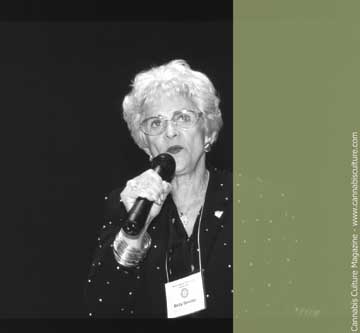 |
| Betty Sembler:
President and founder of Drug Free America Foundation,
Inc. |
Dissembler
While regional
Straight offices were being investigated, closing, and re-opening under
different names, the St Petersburg-based national office, formerly called
Straight Incorporated, was renamed "Straight Foundation Incorporated" in
1985. Ten years later, when Straight's reputation was beyond repair, its
name was changed to the "Drug Free America Foundation, Incorporated.
(DFAF)"
Betty and Mel Sembler, Straight's founders, also founded
DFAF, which began receiving government money and assistance soon after it
opened.
The Semblers are Republican power brokers who profit from
their long-time relationship with the Bush family and other influential
Republicans. Mel Sembler is a millionaire developer who made his fortune
building environmentally destructive projects that are partially
responsible for the severe water shortages and drought plaguing Florida. He
gives lots of money to the Republican Party. His generosity was rewarded
when the first Bush presidency brought him the job of US ambassador to
Australia in 1989.
Another wealthy Republican and Straight
co-founder, Joseph Zappala, was given the ambassadorship to Spain in 1989.
George Bush Senior even made a TV commercial for Straight. Last year,
Sembler headed the Republican national finance committee, helping raise
millions of dollars for George W Bush.
Betty Sembler is a zealous
prohibitionist, attending White House drug policy meetings, serving on
state and federal drug advisory committees, and serving as board member for
DARE Florida and DARE International.
Sembler is a co-chairperson of
Jeb Bush's campaign committee, and a frequent, clandestine financial donor
to Republican causes and candidates. Sembler's efforts to defeat medical
marijuana initiatives are assisted by the Bush family, especially Barbara
Bush, who makes promotional films for DFAF. The organization claims that
George W Bush will base his drug policies on DFAF input.
In 1998,
Sembler and Florida's Department of Law Enforcement sponsored an
anti-medicalization of marijuana conference. The keynote speaker was former
drug czar Bill Bennett. In 1999, the Semblers helped Florida drug czar Jim
McDonough popularize his ecologically-disastrous anti-marijuana Fusarium
fungus idea. McDonough and Betty Sembler are advisors to a powerful Defense
Department drug task force funded through the Florida National
Guard.
DFAF teamed with Arizona's Maricopa County Prosecutor, Rick
Romley, to produce and market a film that opposes medical marijuana. In
February 2001, Bush's White House advisors interviewed Rick Romley for the
position of drug czar at the same time Bush was nominating Mel Sembler as
president of the prestigious Export-Import Bank.
In Florida, Sembler
was honored with "Betty Sembler Day," August, 8, 2000. The honor was pushed
through by Jeb Bush, who feted Sembler for founding DFAF and another
organization, Save Our Society from Drugs (SOS). Both organizations are
devoted to defeating medical marijuana initiatives and drug policy reform.
DFAF received at least $400,000 in government subsidies last
year.
During recent Congressional testimony, Sembler delineated her
absolutist views.
"I am the president and founder of Drug Free
America Foundation, Inc an organization whose mission is to expose the
hidden agenda of those who wish to legalize all Schedule I drugs in our
country," Sembler said. "Their agenda includes subverting Federal
supremacy, manipulating public opinion, and perpetrating a fraudulent
marketing campaign touted as compassion for the sick. We've all witnessed
this campaign, some of us agape at the blatant untruths used to convince
voters in eight states and the District of Columbia that smoked crude
marijuana is really 'medicine' dressed up to look like a weed. These drug
pushers in coat and tie are intent on using any means possible to market
addictive, unsafe, life-threatening substances to our children.
"In
a clear violation of Federal drug laws and the Constitution's supremacy
clause," claimed Sembler, "these businessmen disguised as medical experts,
using tactics worthy of the Goebbels award, distort truth, eschew
legitimate research, manufacture 'facts' and bombard the public with
disinformation. We already know what their motivation is. It is documented
by their own words, and certainly by their own actions. The only thing
standing in their way is the Constitution of the United States of America.
To sweep away the protection offered by that august document, the money
bags have employed wordsmiths so they can hide behind the First Amendment,
and therefore cleverly use the word "recommend" as a euphemism for
prescribe.
"If you read the fine print on any of the initiatives,"
continued Sembler, "or examine the tactics that are being used in states
that have no initiative process, it becomes very clear that this is not
about compassion, and it is not about medicine. It is about softening
public opinion to promote the acceptance that to chemically alter one's
mind is an inherent right. The premise is that old excuse about a
victimless crime. There is no such thing as a victimless crime. The parents
of this nation are helpless without you as our elected representatives
stepping up to the plate and telling the American people the truth: 'you
have been misled.'"
At the 2001 Florida drug summit, I asked Sembler
about critics of Straight and her other anti-drug activities.
"They
should get a life," Sembler said impatiently. "I am proud of everything we
have done. There's nothing to apologize for. The legalizers are the ones
who should be apologizing."
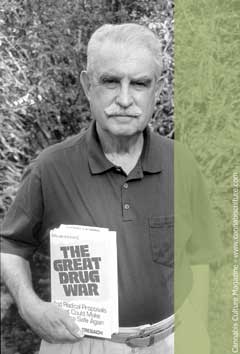 |
| Arnold Trebach: `Many
premier medical people… have been involved in organizations that harm
youth.` |
Straight Away
Alarmed by
the ascendance of the Bush family and its drug war allies to the top ranks
of American politics, Straight survivors and policy reformers are working
hard to expose abuses in America's drug treatment industry.
In July,
former Straight inmates got together with journalists, cult experts,
parents, lawyers, and activists at a Washington, DC conference sponsored by
The Survivors of Harmful Treatment Programs and the Trebach
Institute.
Dr Arnold Trebach, a political science professor, public
interest attorney, and author, founded the institute in 1999 after retiring
from the Drug Policy Foundation, which he founded in 1986.
During
his 50 year career as a civil rights official, professor, and reform
advocate, the 73-year-old Trebach has increasingly focused on the drug war
as a symbol of what's wrong with America.
Trebach's 1987 book, The
Great Drug War, is perhaps the best single volume about the subject. Its
unparalleled credibility and comprehensiveness are grounded in Trebach's
abundant skills as a policy analyst, legal scholar, and investigative
journalist.
The book contains a chapter describing in chilling
detail the incarceration of Fred Collins, now a doctorate-holding professor
of mathematics, in the St Petersburg Straight facility in 1982. Collins did
not have a drug abuse problem, but his brother George was already in the
program, and Straight often demanded that siblings of inmates also be
enrolled in residential treatment. Fred Collins' parents tricked him into
entering the Straight building. He was held there in abysmal conditions
against his will until he escaped four months later.
During Mel
Sembler's tenure as ambassador to Australia, Trebach attended an
international drug conference in the "land down under."
"A
pediatrician from St Petersburg, Donald Ian Macdonald, Straight's medical
director, was on a panel with me," Trebach recalls. "He gave a speech
saying that I represent the worst of America, that it was despicable that
he had to share the stage with a drug pusher. In my response, I said, 'Dr
Macdonald, thank you for revealing to this international audience, and our
American ambassador and his wife, the viciousness and cowardice of drug
warriors. You've worked at the right hand of the president of the United
States, and I want everybody here to know that adopting American drug
policy means adopting these vicious and cowardly
sentiments.'
"During the evening session," continued Trebach, "my
wife and I were sitting near Holland's head of drug policy when Mel Sembler
got up and said, 'I'm glad that everyone is here, including Dr Trebach and
Dr Macdonald. I have some experience in this field - I formed a drug
treatment program called Straight Incorporated, to help children.' The
Dutch official said to me, 'Oh, I have heard about that program. It's the
Hitler Youth.'"
During Mel Sembler's ambassadorship, Betty Sembler
was creating DARE Australia and designing pro-drug war ads for the
Advertising Federation of South Australia.
Trebach later went on
nationwide Australia television, expressing dismay that the American
ambassador was Straight's founder. "I told the country that Straight
destroys children and it should never be adopted in Australia," Trebach
said. "Straight is a window on the rotten core of the drug war: its hate,
hysteria, and cruelty. It's the same stupidity we saw in Vietnam and in
Waco - the government claims to want to save people from some alleged evil,
so it kills them."
Donald Macdonald used his position as Reagan's
White House Director of Drug Abuse Policy to implement policies that
created profits for Straight and other drug war industries. Today,
Macdonald runs a company called Employee Health Programs that helps
employers institute draconian, privacy-busting "drug-free workplace"
regulations required by federal laws that Macdonald himself helped
shape.
Trebach says he's troubled by the "revolving door" aspect of
the drug war industry, typified by the Semblers and Macdonald who network
with politicians and other profiteers, using taxpayer dollars to promote
policies that grant them more tax dollars and more power.
"We have
to be very concerned, at a time when some people are pushing 'treatment' as
an alternative to jail, that many of the nation's premier medical people,
politicians, and policy makers are those who have been involved in, or
supported, organizations that harm young people," Trebach warns. "It may be
that some forms of treatment are no better than jail. They may even be
worse than jail."
Fager, Trebach, Bright and Straight Inc Survivors
have decided to fight back. They intend to provide irrefutable
documentation about drug treatment abuses to Congress, law enforcement
officials, and the media, expose connections between Straight and top
government officials, and seek criminal indictments of treatment industry
operatives who've committed crimes like kidnapping, assault, sexual abuse,
perjury, and false imprisonment.
They're demanding that the US
Department of Health and Human Services guarantee that federal funds will
not be used for drug treatment programs unless protections are in place to
keep treatment from harming children. They'll have lawyers who successfully
sued Straight teach other treatment survivors how to make perpetrators pay
for the wrong they did.
"It's a frightening thing to come forward
and fight Straight and its supporters, because they are the most powerful
people in this country," Bright acknowledged. "I'm afraid I will be
attacked by these people. There are a lot of us working on this, but in the
end, I am alone. This has been a hard path. It's not easy to talk about
what happened to me. Maybe fighting this injustice will ruin my life, but
it will all come out, everything evil they did to me and others, everything
they